What grassroots women and young people can teach the global democracy-support ecosystem about leadership, participation and power?
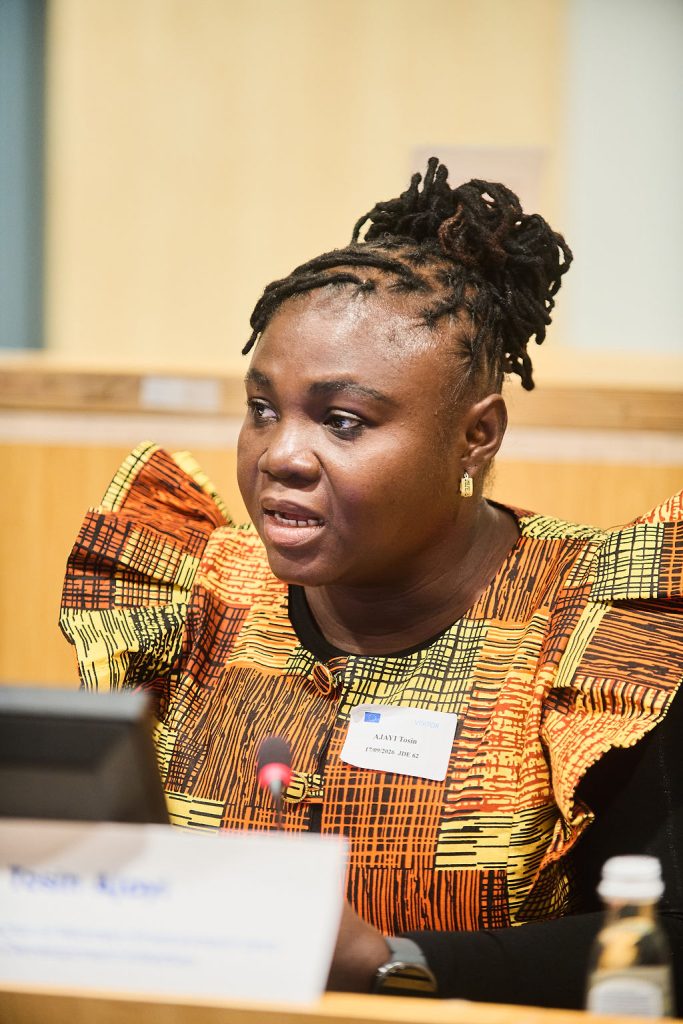
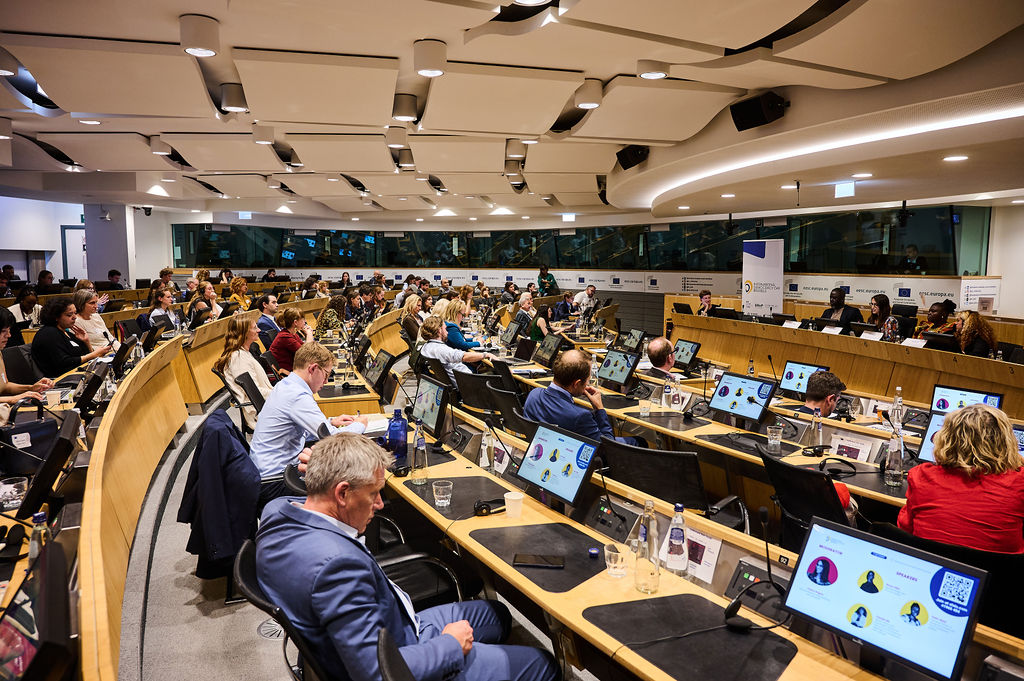
On 17 September 2026, I was in Brussels to speak about something that has been at the center of my work for more than 15 years: leadership at the grassroots. I had the privilege of contributing to the International Democracy Day Brussels Conference 2026, as part of the WYDE Initiative session, “Rethinking Leadership from the Ground Up.”
The occasion was the International Democracy Day Brussels Conference, under the theme “What’s next for Democracy? Innovation and Alliances in a Changing World.” The conference brought together democracy practitioners, civil society leaders, institutions and advocates around a question that feels increasingly urgent…, the question at the heart of our conversation was simple:
Where is leadership already happening—and what would it take for that leadership to flourish?
For me, this is not an abstract question.
It comes from years of working alongside women, young people and communities in Nigeria—people who may never describe themselves as political leaders, yet who organise, mobilise, negotiate, advocate, solve problems and influence decisions every day.
And that experience has forced me to reconsider something fundamental about how we understand leadership.
We often look up when leadership is already happening below
When we talk about leadership, we tend to look upwards.
We look to presidents, ministers, parliamentarians, political party leaders and people occupying formal positions of authority.
But what if we have been looking for leadership in the wrong place?
What if leadership does not begin when someone receives a title?
What if it begins much earlier—when an ordinary person discovers that their voice matters; when they bring people together around a shared concern; when they organise; when they negotiate; when they challenge a decision; when they help their community solve a problem?
That is leadership too.
A woman who mobilises other women around a community issue is exercising leadership.
A young person who organises peers to demand accountability is exercising leadership.
A community actor who brings people together across differences is exercising leadership.
A citizen who insists that public institutions respond to the people they serve is exercising democratic leadership.
The problem is that our systems do not always recognise these acts as leadership until they acquire a formal title.
That gap between leadership as it is practised and leadership as it is recognised matters enormously.
Especially for women.
…,
The question should not only be: “Why aren’t women stepping forward?”
Women are already stepping forward.
In communities across Nigeria, I have seen women mobilise other women, organise communities, negotiate with traditional and religious leaders, advocate for services and participate in political processes.
Young women are organising their peers, using technology to mobilise and creating solutions to problems around them.
So the question is not always whether women have leadership capacity.
The more difficult question begins when women move towards formal political leadership.
That is where the barriers become more visible.
Social expectations matter.
Political structures matter.
Access to networks and resources matters.
Mentorship matters.
Safety matters.
And the attitudes of the wider ecosystem matter.
So rather than asking only:
“Why isn’t she stepping forward?”
we should also ask:
“What happens to her when she does?”
Is she supported?
Is she taken seriously?
Does she have access to information and resources?
Can she build relationships and political networks?
Is she safe?
Can she make mistakes and learn—as male leaders are often permitted to do?
And perhaps most importantly:
Does the system allow her to exercise leadership once she enters the room?
These are not minor questions. They go to the heart of democratic inclusion.
…,
From participation to influence
For years, much of the conversation about women and democracy has understandably focused on participation.
Getting women to register.
Getting women to vote.
Getting women into meetings.
Getting women into political parties.
Getting women into training rooms.
All of these things matter.
But participation cannot be the destination.
Participation must create pathways to influence.
And influence must create pathways to leadership.
At WOYODEV, we describe part of this journey as moving women from political foot soldiers to front runners.
A woman should not only be mobilised to support someone else’s political ambition.
She should also be able to develop and pursue her own.
A young woman should not only be invited into the room.
She should eventually have the opportunity to help shape the agenda.
That requires more than training.
It requires pathways.
If a young woman says, “I want to contest,” who helps her understand the political system?
Who connects her to mentors?
Who helps her build networks?
Who helps her navigate political institutions?
Who supports her when the journey becomes difficult?
Who remains alongside her after the training certificate has been issued?
This is where democracy support needs to evolve.
We need to move from training women for leadership to accompanying women into leadership.
…,
Communities are not empty spaces waiting for solutions
There is another assumption that deserves to be challenged.
Too often, development and democracy programmes approach communities as though they are empty spaces waiting for knowledge, expertise and solutions to arrive.
They are not.
Communities already have knowledge.
Communities already have networks.
Communities already have leadership.
Sometimes what is missing is recognition.
Sometimes it is resources.
Sometimes it is access.
Sometimes it is connection to formal decision-making.
The woman who does not speak first in an international meeting may be the woman who can mobilise 50 people in her community.
The young woman without an impressive title may be the person everyone calls when there is a problem.
The community organiser who has never described herself as a political leader may have spent years bringing women into political processes.
That is leadership.
The challenge for the international democracy-support ecosystem is therefore not simply how to identify people who can deliver programmes.
It is how to identify and support people who are already leading.
My message in Brussels was:
“Do not arrive on the ground looking for people to lead your programme. Go to the ground looking for people who are already leading—and ask what they need to lead better.”
That requires a different starting point.
Listen before designing.
Listen before deciding what the problem is.
Listen before deciding what the solution should look like.
And then make support flexible enough to respond to what is actually being heard.
…,
Stop funding only the visible moment of leadership
One of the most important lessons grassroots work has taught me is that leadership is a journey, not an event.
The conference is visible.
The election is visible.
A woman winning a seat is visible.
A young person speaking on an international stage is visible.
But the years that came before that moment are often invisible.
The community organising.
The mentoring.
The relationship-building.
The confidence-building.
The experimentation.
The failures.
The disappointments.
The decision to try again.
That is where leadership is built.
Yet funding and programme cycles can sometimes be structured around outputs that are easier to count than the slow work of building democratic agency.
If we want sustainable democratic leadership, we must be willing to support the journey that produces the leader, not only the moment when leadership becomes visible.
This is particularly important for women.
Because women often have to navigate not one barrier but an ecosystem of expectations, institutions and power relations that determine whether their participation translates into actual influence. Current WYDE work similarly identifies structural and social barriers—including discriminatory norms and unequal power relations—as central constraints on women’s political participation and leadership. (International IDEA)
…,
Three shifts the democracy-support ecosystem needs
For me, this points to three fundamental shifts.
- From beneficiaries to partners
People at the grassroots should not simply be recipients of democracy programmes.
Their knowledge should shape the programmes.
Their experiences should inform the questions.
Their leadership should influence the solutions.
- From participation to power
Counting participation is not enough.
We must ask whether participation changes who has influence, who shapes decisions and who gets to exercise power.
- From producing leaders to recognising leadership
Perhaps the most important shift is this:
We do not always need to create leaders.
We need to recognise leadership that already exists, nurture it, resource it and create pathways through which it can influence formal decision-making.
…,
What if we reversed the direction of democracy support?
The traditional model can sometimes look like:
Framework → funding → programme → activities → communities.
But from the grassroots, democracy can look very different:
Community reality → local leadership → local solution → adaptation → organisation → policy engagement → institutional change.
That is not simply a different programme model.
It is a different understanding of where democratic change comes from.
The 2026 IDD Brussels session itself was designed around this question—creating space to listen directly to grassroots perspectives and examine how the democracy-support community can learn from realities on the ground. (International IDEA)
If democracy support is serious about being responsive to citizens, then perhaps we need to reverse the direction of the conversation.
Not simply:
How do we take democracy to communities? Nor.What can iinstitutions deliver to communities?
But:
What can democracy-support institutions learn from the democracy that communities are already practising?
…,
The ground is where democracy begins
This is ultimately why I believe the language of the “last mile” can be misleading when we talk about grassroots democracy.
The grassroots are not the final destination of democracy support.
They are not merely where programmes are implemented.
They are not simply beneficiaries at the end of a funding chain.
The ground is where democratic agency begins.
It is where citizens experience the consequences of public decisions.
It is where people first learn whether their voice matters.
It is where women organise.
Where young people mobilise.
Where communities negotiate.
Where citizens demand accountability.
Where informal leadership emerges long before institutions recognise it.
International IDEA’s longstanding work on democracy at the local level similarly emphasises that citizen participation and local democratic practice are fundamental to giving democracy practical meaning. (International IDEA)
So perhaps the deeper question before us is not simply:
“How do we create better leaders?”
It is:
“How do we create democratic systems that can recognise, nurture and transfer power to the leaders already emerging from the ground?”
If we can answer that question honestly, we will not only be rethinking leadership.
We will be rethinking democracy itself.
And perhaps that is where the next generation of democratic innovation needs to begin:
Not by looking further upwards for answers.
But by looking more carefully at the ground, the frontlines, and the grassroots communities.
Where is leadership already happening?
Who is already leading?
What do they need to lead better?
And, ultimately:
What would it take for that leadership to flourish?
That is the conversation we need to continue.
………………………………………………………………………………………………………………………………………………..
A note on the Brussels conversation
I am grateful to Chiara Grigolo and Raquel Banon for moderating the session, and to Emmy Otim and Camila Moreno Gil for sharing the conversation and perspectives from different contexts on the panel. I am equally grateful to the organisations and teams behind WYDE, International IDEA, the European Partnership for Democracy, the European Network of Political Foundations, and the European Endowment for Democracy and Carnegie Europe for creating a space where grassroots perspectives could enter a global conversation about the future of democracy. Many thanks to Lea Paccaud, Adina Wolf and all the UNWOMEN-WYDE team for ensuring the efforts of WOYODEV at the grassroots in Nigeria is showcased at the global stage in Brussels! You all are my power ladies!
The core organizing team facilitating processes at the background-accommodation, logistics, access, comfort, travels, visibility, amplification- Gwennaëlle Joret, Giorgi Akhalkatsi, Selma Draoui, and others, you are great! The team did wonderfully well and made my stay in Brussels worthwhile. The coordination with the UNWOMEN Team was topnotch!
For me, Brussels was not simply an opportunity to speak on an international stage.
It was an opportunity to carry into that room the experiences, lessons and voices of the women, young people and communities I have had the privilege of working alongside in Nigeria and also to connect with great minds contributing to ensure the world is a better place at their own corner!
The ground is not the last mile of democracy.
The ground is where democracy begins.
………………………………………………………………………………………………………………………………………………..
This reflection draws on my contribution to the WYDE Initiative session “Rethinking Leadership from the Ground Up” at the International Democracy Day Brussels Conference 2026, held in Brussels on 17 September 2026. I remain grateful to the organisers and fellow contributors for creating space for grassroots perspectives in the global democracy conversation.
Tosin Apiriola-Ajayi
Executive Director, Women Environment and Youth Development Initiative (WOYODEV)

